Dieseled Dragon
How to Free a Seized Engine: What Worked on My 7.3 IDI and 283
The cylinder damage is at 9:57, the heat cycles at 18:56 and the moment it breaks free at 22:58. Watch on YouTube: Seized 7.3 IDI Sat 6 Years: Will It Run AND Drive? ↗
Short answer: Most engines that seize while sitting are held by rust in one or more cylinders. The usual approach is to soak the cylinders with penetrating oil, then turn the crank with steady leverage. My 1967 Corvette's 283 broke free that way. My 1990 F350's 7.3 IDI did not. It took pulling both heads, cleaning out the rusted cylinders, more soaking, heat, and finally a high-torque starter with the heads off.
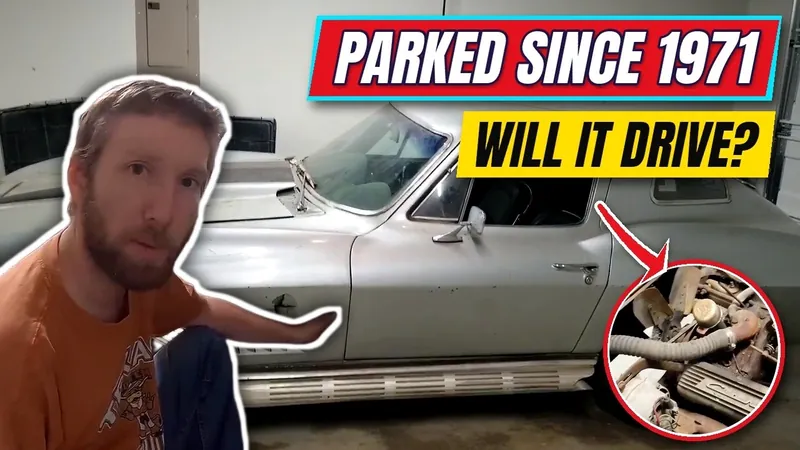
Engine 1: the 283 in my 1967 Corvette, parked since 1971
The Corvette's 283 had been sitting for about 50 years, and it was seized solid.
The soak. My plan was a funnel and a half-inch hose into each spark plug hole, but the hose was too big for the holes. A small hand pump with a thinner hose did the job, and I filled every cylinder with Marvel Mystery Oil.
The first attempts. After a day of soaking, I went to turn it by hand and found the crank pulley had no center bolt. The only way to turn the engine was on the pulley bolts, and those just kept tightening. I stopped before one snapped. Next I bought a crankshaft rotation adapter that bolts to the pulley. It needed longer bolts than the ones that came with it. Even with a one-inch socket, a breaker bar and a cheater bar, the engine stayed stuck.
What moved it. A regular ratchet with an extension and the cheater bar finally turned it. Marvel Mystery Oil ran out of the cylinders, a sign the pistons were moving. I kept turning it until it got easier, and after that the starter spun it over. The full story is on the 1967 Corvette build page, and the freeing starts at 8:22 in the Corvette video.
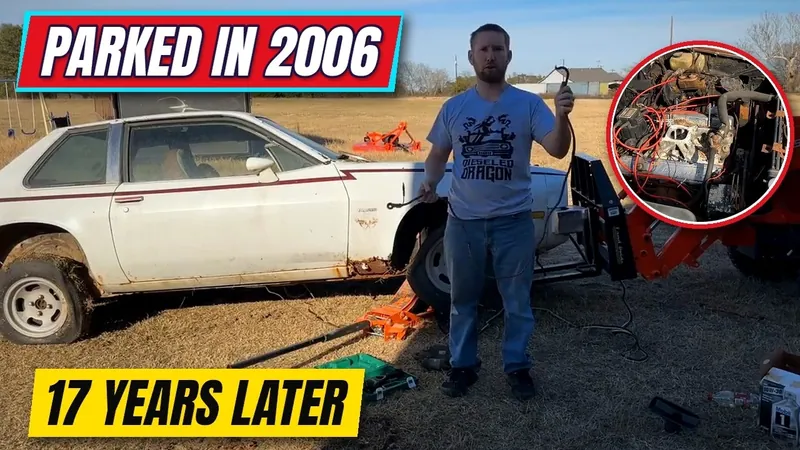
Engine 2: the 7.3 IDI in my 1990 F350, seized for six years
The F350 was listed on Facebook Marketplace as having no engine. When I picked it up, it had a 7.3 IDI, partly torn down, with a breaker bar still hanging on the crank. The seller said it needed a head gasket. It didn't turn.
Two weeks of soaking wasn't enough. It had soaked in Marvel Mystery Oil for about two weeks and was still locked.
Heads off. Pulling the first head explained everything. The head gasket had failed, there was rust and heavy crust on the head, and one valve was stuck open. The back two cylinders on the driver's side were rusted, and that was what held the engine. I cleaned them out and left them soaking in PB Blaster with acetone mixed in, plus Marvel Mystery Oil. The second head and its cylinders looked far better, and the soak had already cleaned the cylinder walls.
Pulled the Head on a Seized 7.3 IDI: Why It Locked Up Watch the Short: Pulled the Head on a Seized 7.3 IDI: Why It Locked Up ↗
Leverage, then heat. I tried the breaker bar on the crank bolt but stopped short, because I didn't want to break the bolt. I tried turning it at the flywheel through the inspection cover, but the crossover pipe was in the way. I confirmed the transmission was in neutral. Then I ran several heat cycles on the cylinders, heating them and letting them cool, with a fire extinguisher ready. I felt it move slightly, but it still wouldn't turn.
The breaker bar on the crank: the leverage attempt that didn't free it. Watch the Short: Seized 7.3 IDI: Will It Break Free? ↗
The starter broke it free. The truck was getting a new high-torque starter anyway. Its top bolt is nearly impossible to reach, so I bumped it with just the two lower bolts in. With the heads off, there was no compression to fight. The pistons moved, and the engine broke free. My note to myself from that day: a starter can sometimes free an engine, especially a high-torque one.
Three weekends later, after an injection pump swap and pump timing, it started for the first time in about six years (45:34 in the video).
When it doesn't work: my 1965 Mustang 289
Not every engine comes back. My 1965 Mustang 289 had sat with no carb, no plugs and every hole open. I soaked it in vinegar for a week and then in penetrating oil for two more weeks. Every valve was stuck with rust, and the oil pan held water instead of oil. I broke two bolts off in the balancer, replaced it, and the engine finally turned, but not correctly. It most likely sheared the balancer key. That engine needs a complete teardown.
Common steps for freeing a seized engine
These are widely used steps, not a guarantee.
- Make sure it's really seized. Check that the transmission is in neutral or park and that nothing on the accessory drive is locked up.
- Remove the plugs. Take out spark plugs, or glow plugs or injectors on a diesel, so you aren't fighting compression or trapped liquid.
- Soak the cylinders. Fill each cylinder with penetrating oil and give it days, not hours. Top it off as it seeps past the rings.
- Use the crank, and go slow. Put steady force on the crank bolt in the engine's normal direction of rotation, and rock it back and forth. Small pulley bolts break easily.
- Look inside if it won't budge. Pulling the heads shows you exactly which cylinders are rusted and lets you clean them directly.
- Heat with care. Heat cycles can help break rust, but only with a fire extinguisher close and no fuel or oily rags nearby.
- Use the starter last. Many mechanics advise against it, because it can break parts. If you try it, do it with no compression and short bumps.
- Inspect before you run it. Once it turns, change the oil and look at the cylinder walls.
Takeaway
The soak and leverage freed the 283 in a day. The 7.3 IDI needed to be opened up before I could see what was holding it. If yours won't move after a long soak, take the heads off and look before you put more force on it.
If you're bringing back something that has sat, read Getting a car running after it sat for years next. If it turns but only clicks at the key, see Starter clicks once but won't crank.
FAQ
How long should I soak a seized engine?
It depends on how bad the rust is. My Corvette's 283 turned after one day of Marvel Mystery Oil and a lot of leverage. My 7.3 IDI was still locked after about two weeks. Plan on days to weeks, and top off the soak as it seeps down.
What should I use to soak a seized engine?
I used Marvel Mystery Oil on the 283 and the 7.3 IDI. On the IDI, I also used PB Blaster with acetone mixed in. Vinegar did not free my Mustang 289. I can't say one product is best. Time in the cylinders and the condition of the engine mattered more.
Can the starter free a seized engine?
On my 7.3 IDI, a high-torque starter freed it, but only after the heads were off, the rusted cylinders were cleaned and the engine had soaked. Many mechanics advise against using the starter because it can break parts, so treat it as a last resort.
Do I need to pull the heads to free a seized engine?
Not always. The 283 freed without pulling the heads. The 7.3 IDI needed them off, which showed me two rusted cylinders and a failed head gasket.
Can a seized engine be saved?
Two of mine ran again after being freed. My Mustang 289, which had sat open and full of water, did not, and it needs a full rebuild.