Dieseled Dragon
Radiator Fan Won't Come On? How a Missing Ground Stopped the Fans on My '67 Corvette
The new ground goes on, then the fans come on when the temperature switch wire touches ground. Watch on YouTube: Dragon Tip: Radiator Fan Won't Kick On? Check the Ground ↗
Short answer: The electric fans on my 1967 Corvette's new aluminum radiator wouldn't come on. The fans weren't bad. The radiator didn't have a good ground. I drilled a new hole, ran a ground to the radiator with a self-tapping screw, and with the key on, the fans came on as soon as the wire from the temperature switch touched ground.
The setup
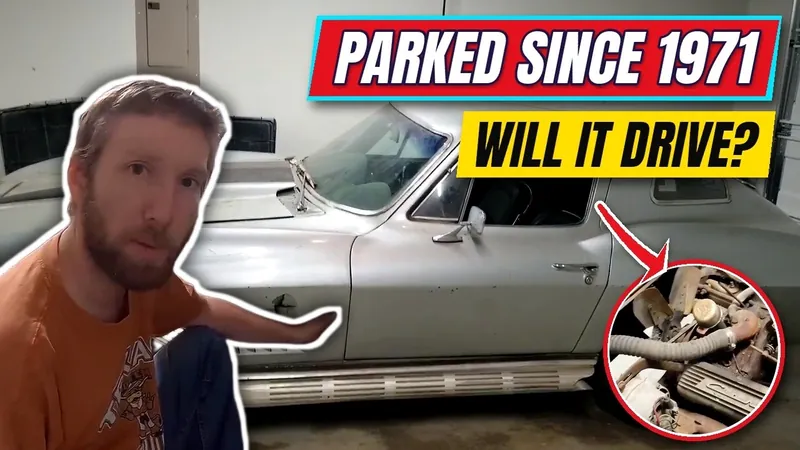
My '67 Sting Ray had a bad radiator, so it got a DeWitts aluminum radiator with electric fans. Electric fans need more wiring than the old belt-driven fan: a temperature switch, relays and power through the firewall. I mounted the relays on the inner fender and routed the wiring myself.
The symptom
The fans wouldn't come on. But when I touched the wire from the temperature switch to the engine block, they roared to life. That told me the fans and the relays worked, and that the problem was the path to ground.
Why the ground matters on a C2 Corvette
A C2 Corvette has a fiberglass body, and fiberglass doesn't conduct electricity. On a steel car, a lot of parts get their ground through the body without anyone thinking about it. On a Corvette, anything that needs a ground has to have its own wire or a solid metal path back to the battery. A radiator mounted in that body can end up with no good ground at all.
The fix
- I drilled a new hole for a ground on the radiator.
- I ran the ground and fastened it with a self-tapping screw.
- With the key on, I touched the wire from the temperature switch to ground.
- The fans came on.
No new parts were needed. It was one ground wire and one screw.
A second wiring problem: dead low beams
The Corvette's headlights gave me a similar lesson. The low beams didn't work. When I looked at the harness connector, one pin had backed out of it. I pushed the pin back into the connector and the low beams came on. Then I ran the pop-up headlights up with the lights on and the brights on, and everything worked.
One pin had backed out of the headlight harness connector. Watch the Short: Low Beams Dead? One Loose Pin in the Harness ↗
Before you buy a new fan or switch
Common practice: these checks cost nothing and rule out the most common wiring causes first.
- With the key on, jump the fan's trigger wire to a known good ground. If the fan runs, the fan and relay are probably fine.
- Check every ground in the circuit for paint, rust or a loose screw. Clean metal under the ring terminal matters.
- On a fiberglass car, don't assume anything is grounded through the body. Give it its own ground.
- If one light or circuit is dead, look at the connector before the bulb. A pin that has backed out can look connected from the outside.
More fixes: Starter clicks once but won't crank
FAQ
Why won't my electric radiator fan come on?
On my Corvette, the fans and the temperature switch were fine. The radiator didn't have a good ground. Once I added one, the fans came on.
How do I test whether it's the ground?
With the key on, I touched the wire from the temperature switch to a known good ground. If the fans run that way but not on their own, look at the ground path before you buy parts.
Why is grounding harder on a C2 Corvette?
The body is fiberglass, which doesn't carry current. Anything mounted to the body needs its own ground path, and you can't count on the body to provide one the way it does on a steel car.
What fixed my dead low beams?
One pin had backed out of the headlight harness connector. I pushed it back in and the low beams worked.