Dieseled Dragon
Getting a Car Running After It Sat for Years: What My Barn Finds Taught Me
Cleaning out the critters is at 5:39, the battery cable at 12:00 and the first start at 17:03. Watch on YouTube: I Parked It Before Joining the Marines. 17 Years Later, Will It Run? ↗
Short answer: Clean out whatever moved in, find what's missing, prove the engine turns, check the oil, sort out spark, give it a good battery and clean fuel, and be ready to shut it off on the first start. Fix the brakes before it moves. Every vehicle below failed at a different one of those steps.
The vehicles behind this list
- 1980 Chevy Monza: I parked it in 2006, right before I joined the Marines. It sat 17 years.
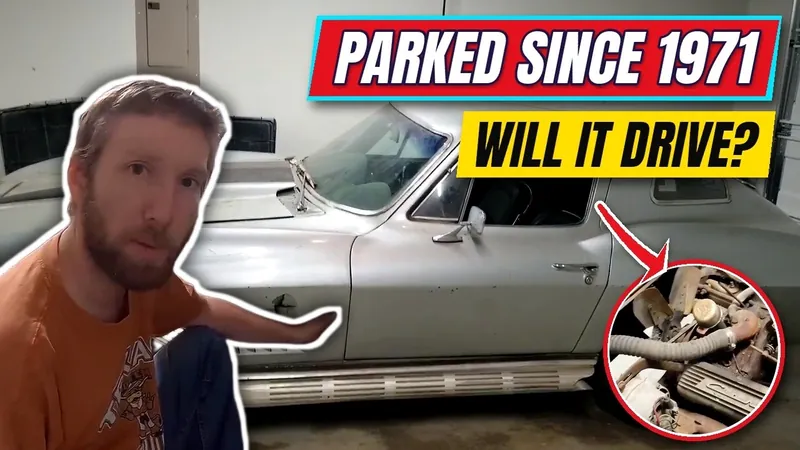
- 1967 Corvette Sting Ray: parked since about 1971.
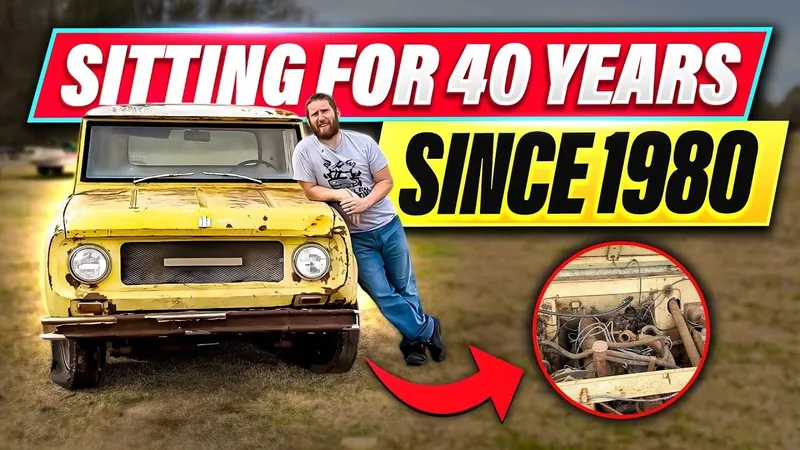
- 1966 International Scout 800: parked since 1980.
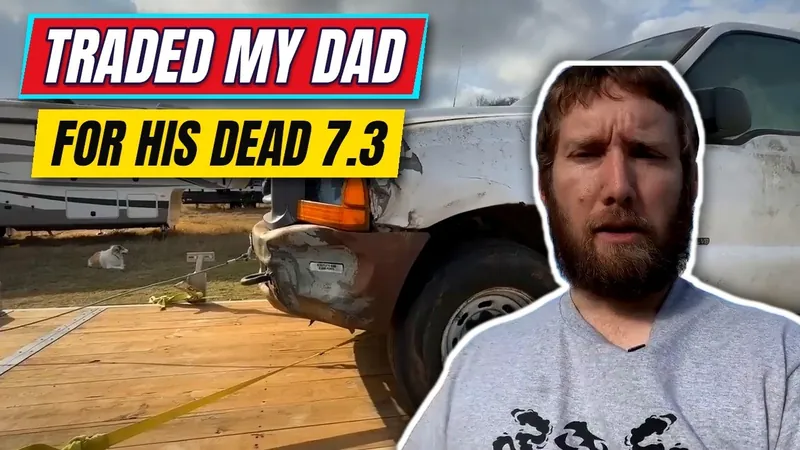
- 2001 Ford F250 7.3 Powerstroke: my father's truck, parked about eight years.
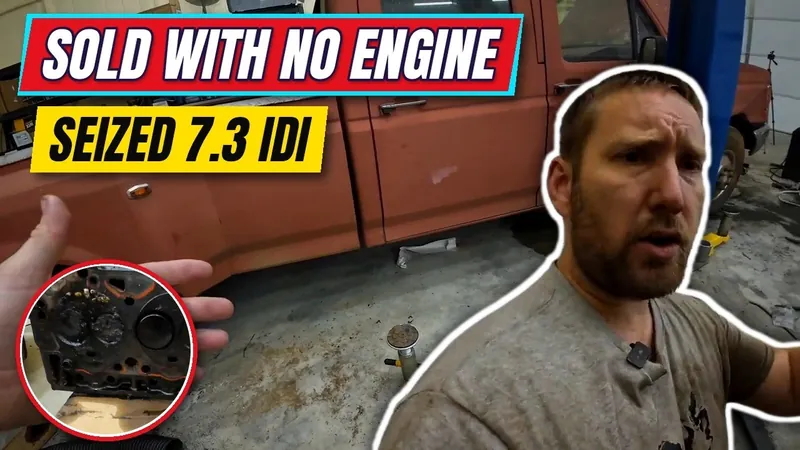
- 1990 Ford F350 7.3 IDI: seized and sitting about six years.
The video above is the Monza, because it ran into nearly every problem on this list in one afternoon.
Before the Marines, a friend gave me a Monza that didn't run. A new fuel pump and it started right up. Watch the Short: The Free 1980 Monza That Saved Me Before I Joined the Marines ↗
1. Clean out what moved in
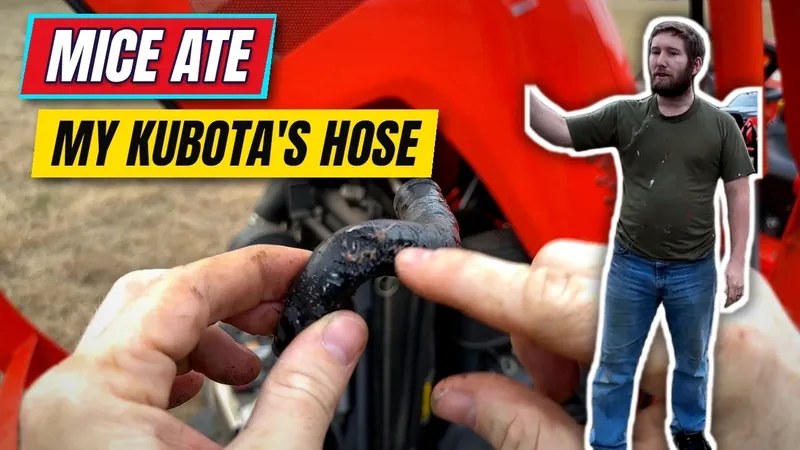
When I opened the Monza's hood, animals had built a nest and packed it down into the intake. At some point the carburetor had been taken off for another car, which left the intake open to whatever fell in. I dug out as much as I could reach with a screwdriver before doing anything else. The Scout was full of leaves and debris, and that came out first too.
Common practice: clear nests and debris from the intake, air cleaner and exhaust manifold area before cranking. Anything left there can be pulled into the engine or catch fire.
2. Find what's missing or chewed
Something is always missing. The Monza had chewed plug wires, a broken dipstick and a lower radiator hose taken off the water pump. The Scout had no radiator and no ignition switch. The Corvette had no key. The F250's starter was missing its top bolt. The F350 was missing its alternator, thermostat, radiator hoses and belts.
Common practice: walk around the whole engine bay with a light and make a list before buying parts.
3. Prove the engine turns
On the Monza, I pushed on the fan belt and watched the alternator pulley and the crank pulley move together. That told me the engine wasn't stuck. The Scout turned with a wrench on it. The Corvette and the F350 did not, and freeing them is its own job, covered in How to free a seized engine.
Common practice: turn it by hand before you ever use the starter.
4. Check the oil
With the Monza's dipstick broken, I couldn't tell how much oil was in it, so I added a quart to be safe. I'd rather run it a little overfull than empty. The Scout and the F250 were each about a quart low, which I accepted for a first start. On the Scout, I also sprayed lube into the cylinders so it wouldn't dry-start.
Common practice: look for water or fuel in the oil, and change the oil and filter if it's been sitting a long time.
5. Sort out the spark
On the Scout, the firing order is 1-3-4-2, and two of the plug wires were swapped. Correcting them is what got it to fire. On the Corvette, the plug wires were not where number one should be on the cap, so I moved them around, and it started. The Monza got two plug wires borrowed from my Torino to replace the chewed ones.
Common practice: confirm the firing order and the number one position from a manual for your engine, not from the old wiring.
6. Give it a good battery and good cables
When I turned the Monza's key, nothing happened. The main battery cable had no end on it and fell off when I touched it, and it had melted spots along its length. With a new cable, the starter spun slowly and smoked. A bigger battery is what finally cranked it at a decent speed. The F250 needed a new battery too, and the Scout cranked fine on the battery from my 7.3.
Monza Has No Power: Check the Fuse Cable End Watch the Short: Monza Has No Power: Check the Fuse Cable End ↗
Common practice: use a fully charged battery, clean the terminals, and inspect the main cables and grounds end to end.
7. Use clean fuel
Old fuel caused trouble on every vehicle. The Corvette's mechanical fuel pump worked, but the fuel it pumped was bad, so it ran from a boat tank and an electric pump. The Monza ran from an auxiliary tank. The F350's diesel was varnished and had no smell, so I ran it from five gallons of fresh diesel, put in a new filter and bled the lines. The Scout ran with fuel poured down the carb after I repaired a fuel line. Two of these cars ran on a carburetor borrowed from another car, and the Scout got a new replacement carb that cost less than a rebuild kit.
Common practice: don't run years-old fuel through the engine. Feed it from a clean temporary tank.
8. Be ready on the first start, and fix the brakes before driving
The Monza started, and the throttle stuck wide open, so I killed it instantly. The accelerator pedal bracket was twisting under the return spring and wouldn't let the pedal come back. A stronger spring fixed it. The Monza still didn't get driven, because rats had chewed the oil pressure gauge line and it was spraying oil.
Brakes are the other trap. The Corvette had no caliper and no brake line at one corner. The F350's rear drums were locked up and its shoes were cracked, so it got all-new brakes. The F250's parking brake wouldn't release.
Common practice: keep a hand on the key, watch for leaks and oil pressure, and don't drive until the brakes are inspected and bled.
The full checklist
The steps above are what happened on my vehicles. The free Will It Run? checklist covers each step in more detail, including diesel notes for the 7.3 IDI and Powerstroke. Each vehicle's full story is on its build page: the 1967 Corvette, the 1966 Scout 800 and the 2001 F250. If it clicks once and won't crank, see Starter clicks once but won't crank.
FAQ
Can you start a car that has been sitting for years?
Often, yes, if the engine turns. My Monza (17 years), Corvette (about 50 years), Scout (over 40 years), F250 (8 years) and F350 (6 years) all ran again. None of them started without some work first.
What should I check before starting a car that sat for years?
On mine: animal nests and debris, missing or chewed parts, whether the engine turns by hand, the oil, the plug wires and firing order, the battery and cables, and the fuel. The Will It Run? checklist lists each step.
Should I use the old gas?
I didn't on any of them. The Corvette, Monza and F350 all ran from a clean temporary tank.
Why does it smoke so much on the first start?
The Corvette smoked heavily enough on its first run to make my eyes burn. Commonly, much of that is oil that soaked into the cylinders burning off. Heavy smoke that doesn't clear up after the engine warms is worth investigating.
Is it safe to drive once it runs?
Not until the brakes are checked. One corner of my Corvette had no caliper at all.